
Author: Stijn Huijts
-

Belgian Market Court upholds BCA’s interim measures against UCI gear ratio rule
On 20 May 2026, the Market Court (Brussels Court of Appeal) dismissed an appeal brought by the International Cycling Union (“UCI”) against interim measures imposed by the Belgian Competition Authority (“BCA”) in October 2025, keeping in place the interim suspension of the UCI’s controversial “maximum gear ratio” rule. The judgment is a further reminder that sporting regulations,…
-

The Tondela ruling: VAR needed to decide object of Covid-19 no-poach
When leagues and football clubs were faced with the suspension of football competitions as a result of the Covid-19 outbreak, they had to urgently ensure that leagues could be finalised at a later date than usual, preserving a level playing field for the (extended) duration of the season. In Portugal, this led to professional football…
-

Power Cables and Cardboard Packaging: Sumal confirmed and refined
On 16 April 2026 the Court of Justice of the European Union (CJEU) delivered its judgment in the joined cases C-672/23 Electricity & Water Authority of the Government of Bahrain and Others (Power Cables) and C-673/23 Smurfit Kappa Europe and Others (Cardboard Packaging). The ruling further clarifies the interaction between the Sumal doctrine and Article 8(1) Brussel I bis Regulation in the context of competition damages claims. The judgment addresses…
-

All change for the UK merger regime – Except the standard of review?
Traditionally, the UK has had a two-stage decision making process for merger cases. First, there were two separate organisations, the Office of Fair Trading (OFT) and the Competition Commission (CC). The OFT would carry out the first phase review of a merger (“Phase 1”) and, if there were reasonable prospects that the merger would result…
-

Combination Therapies in Pharma – Removing the Antitrust Roadblock
This month, the Belgian Competition Authority (BCA) published guidance on information exchange between pharmaceutical companies in the context of the reimbursement application procedure for combination therapies. This follows a prioritisation statement adopted by the UK Competition and Markets Authority (CMA) in 2023 on the same issue and long-standing demands from the Belgian pharmaceutical industry.[1] In…
-
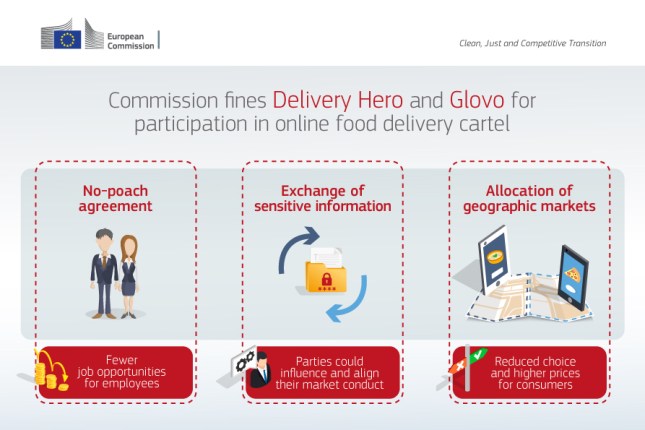
Private Equity and Common Ownership in Professional Rugby: Applying the Delivery Hero Standard
By Dr Beverley Williamson From time to time, the Thicket blog invites guest bloggers to write about a topic that is close to their heart. Geradin Partners is pleased to give the floor to friend of the blog Dr Bev Williamson who is an expert in the application of competition law in the sports industry.…
-
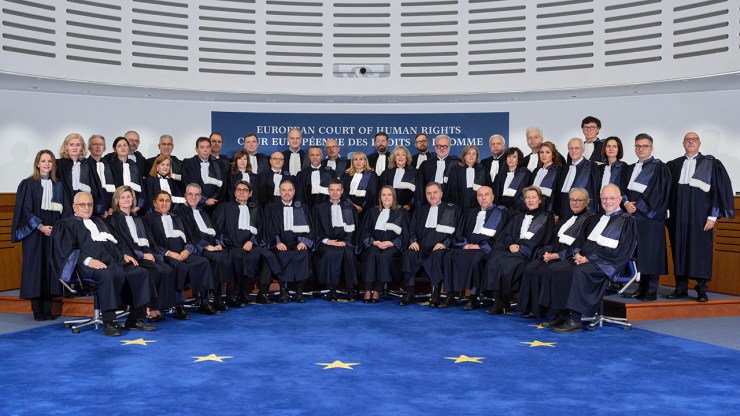
Strasbourg calling – ECHR majority CLEARS Competition Wiretap Case (But mind the dissenters)
Ships Waste Oil Collector B.V. and Others v The Netherlands, Joined cases 2799/16, 2800/16, 3124/16 and 3205/16, Judgment of the ECHR Grand Chamber of 01/04/2025 Just as fishing inevitably results in bycatch, law enforcement wiretaps often capture information unrelated to the original investigation. This incidental data can raise complex legal questions—especially when it reveals evidence…
-

The CJEU rules in the Diarra case – FIFA’s transfer rules restrict free movement and competition
From a competition law perspective, sport is, in some ways, unlike other industries. It may be driven by ideals other than profit, such as sporting merit and fair play. It also only functions through collaboration: associations, leagues and clubs need to agree on fixture dates and kick-off times, amongst other things. But sport also involves…
-

AG Opinion in FIFA v BZ – Further competition trouble for football rules
Most professional football transfers happen when a player is free to leave because their contract expires, or when current club, player, and new club come to a mutual transfer agreement. But the world is not perfect. Situations arise where a player does not live up to expectations or does not feature in the manager’s plans.…
-

Royal Antwerp – Breaking new ground in antitrust in labour markets
To ensure a steady supply of football talent, professional football clubs must do their bit to invest in grassroots football. To incentivise this investment, UEFA and several national football associations introduced “home-grown player rules”, which dictate that a minimum number of players on the match sheet must be home-grown. However, a player, supported by Royal…